The Ghosts in America's Machine
Bound by Chains: Calvinism and the Justification of Black Oppression
The same Puritan reflex that equated labor with divine favor was, within a century, repurposed to sanctify slavery. It was read as proof that white prosperity was providence and Black labor was only duty. This piece traces that twisted inheritance from Cotton Mather's slaveholder reassurances through Reconstruction's betrayal to the redlining and 'respectability' politics still shaping the present, drawing on Black theologians and writers — Douglass, Du Bois, Cone, Baldwin — who most clearly named the hypocrisy.
The Myth of the Chosen Nation: Puritanism and the Birth of American Exceptionalism
Winthrop's 'city on a hill' didn't stay religious for long. By the 1800s, it had become Manifest Destiny, and the Puritan idea that labor proves worth had been stripped of its theology and put to work justifying continental conquest, immigrant exploitation, child labor, and the federal troops sent to shoot striking workers. This piece tracks that progression and lands on the line that anchors the whole series: 'American Exceptionalism is simply Puritan anxiety scaled up to the size of a continent.'
Two Americas: How the Founders Fought Over the Soul of the Nation
Jefferson called Calvin's theology 'demonism'; John Adams warned that liberty without religious discipline would collapse into chaos. The Constitution was built from both instincts, and history shows the more punishing half has usually won.
Purity and Power
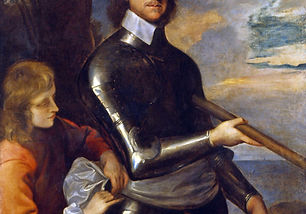
Cromwell tried to build a godly England and ended up massacring thousands at Drogheda while banning Christmas. The same instinct crossed to New England, and it's the same one still driving purity culture, punitive schooling, and the belief that suffering builds character.
The City on a Hill and Its Shadows
In 1630, John Winthrop told a shipful of Puritans they'd be watched by the world, a line that's echoed through every generation of American exceptionalism since. This is the piece that starts the series: tracing how a Calvinist theology of visible righteousness became a national myth, and what gets justified once you decide some people belong on the hill and some don't.
Prison Without Walls: The Puritan Blueprint for America
The Puritans wanted to build a "city on a hill," but their blueprint also laid foundations for judgment, exclusion, and endless striving.
Work, Worth, and Community: What Calvinism Got Right
The Puritans built a society that policed itself, first through neighbors, then through conscience. This piece traces how that surveillance moved inward and asks whether what it left behind (discipline, resilience, reflexive self-judgment) adds up to a gift or a curse.